|
Interview
How grads burnt by the job market changed the PMC’s labor politics.

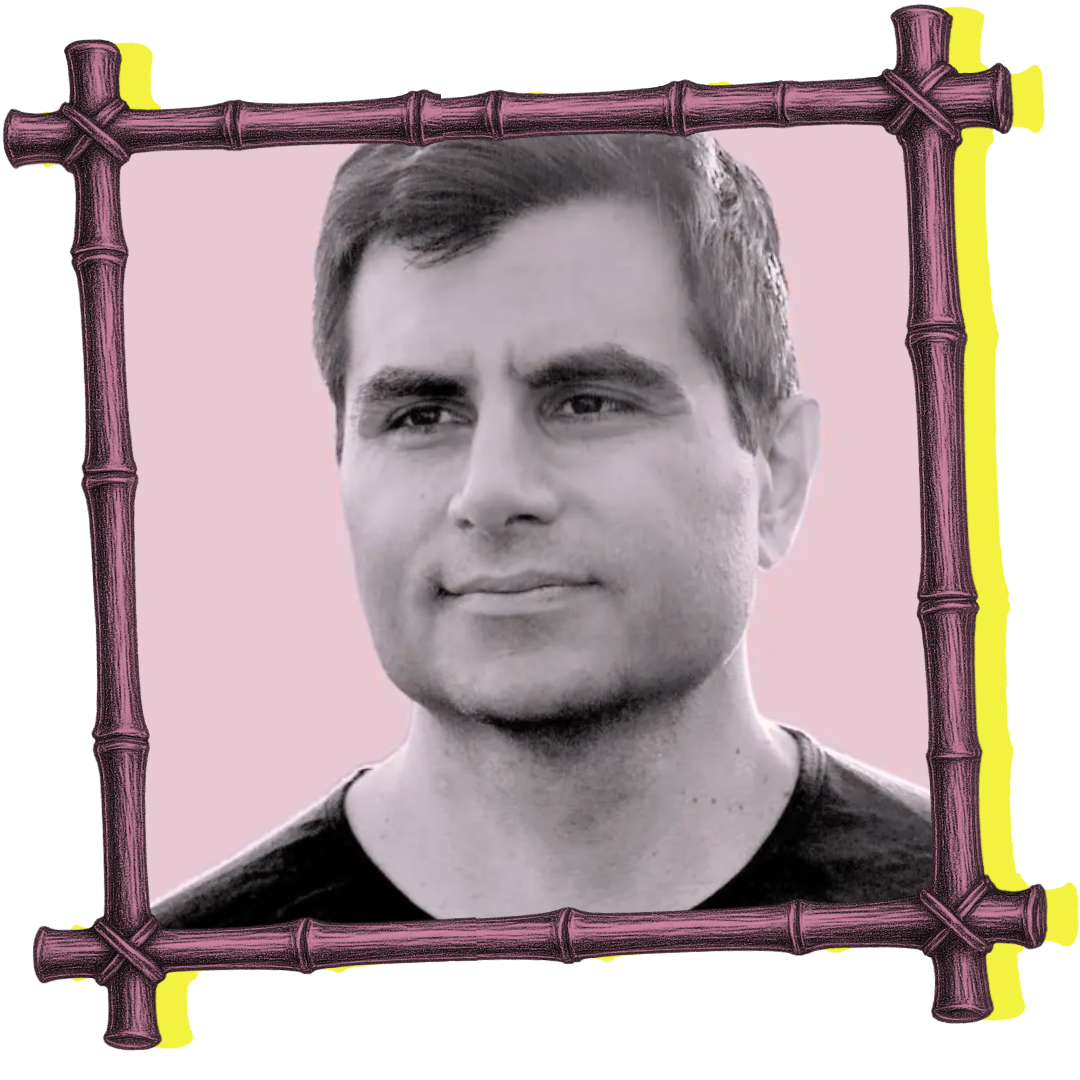
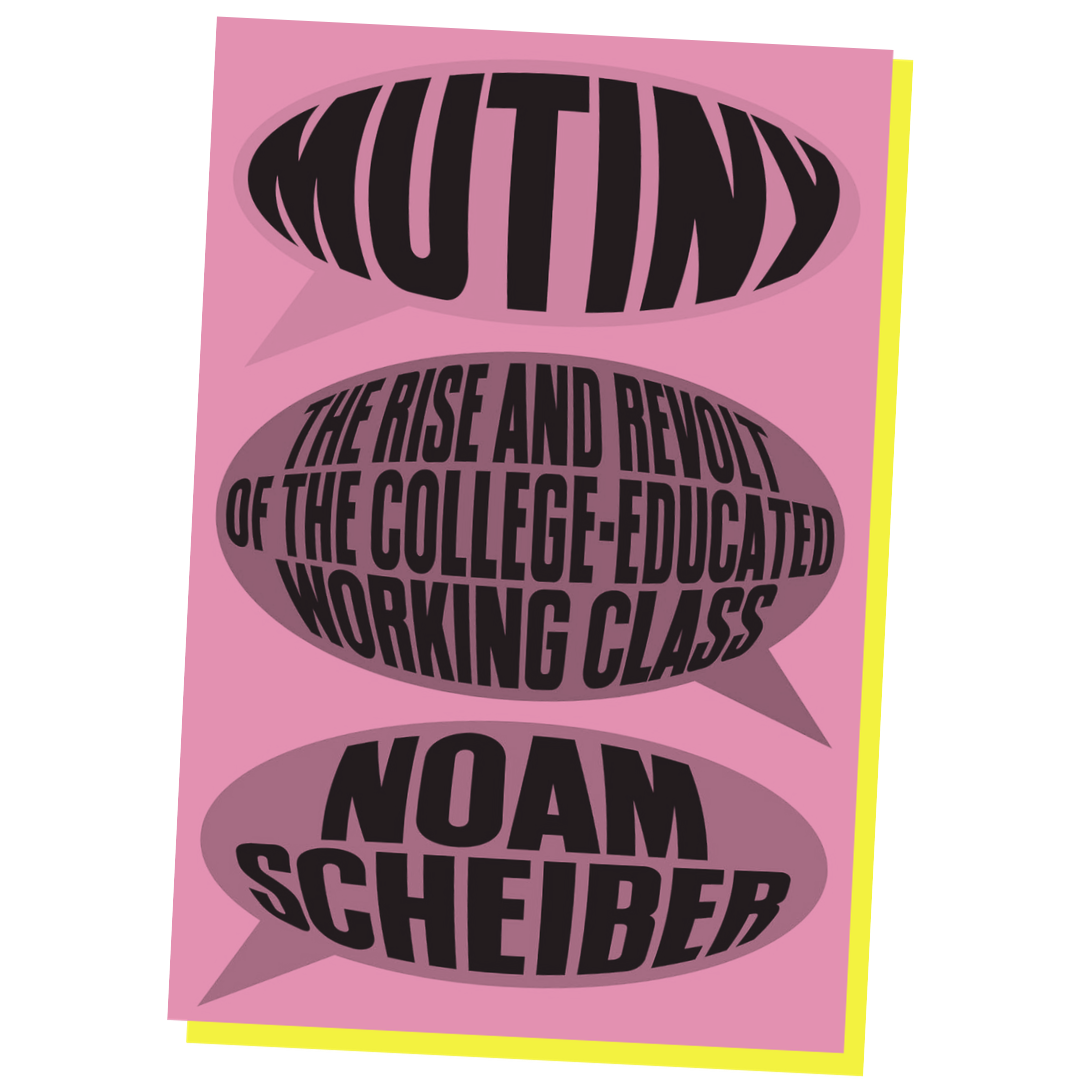
Like Chuck-E-Cheese tickets, a college diploma use to be redeemable for prizes. For sixty years, a degree more-or-less guaranteed non-fuck ups professional status and stability. Then, around 2008, something ruptured. In Mutiny: The Rise and Revolt of the College-Educated Working Class, Noam Scheiber, a labor reporter for the Times, walks the length of the college-to-barista-to-agitator pipeline, following labor organizers who had, at one time, expected to be management. The book extends grace to its subjects in a way many commentators haven't and tracks not just compelling subjects, but what happens when the well-educated start seeing themselves as workers rather than proto-professionals. A specific worldview. A wan smile behind the counter.
Upper Middle spoke to Scheiber about Starbucks, underdogism, and AOC as the standard bearer for the temporarily aimless.
The title of the book makes a claim — that there's a "college-educated working class." Is there?
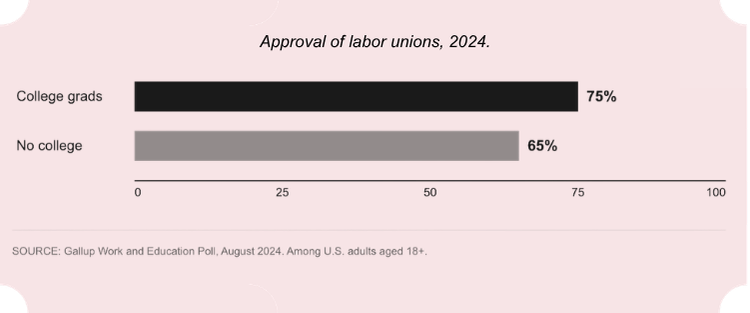
Class is mostly material. People who graduated from college in the late 1990s — even if they worked at Starbucks for a few years — thought of themselves as future managers. And if they didn't do well, the onus was on them. By the second half of the 2010s, white-collar workers started seeing themselves purely as workers. During the 2023 auto worker strikes, 76% of college grads supported the UAW. That was new. It was a swing in public sentiment.
The people in your book share something that's not quite a philosophy. More of a worldview. How do you describe it?
It's broader than economics. I call it identification with the underdog — whether it's someone taking shit from a manager or people in Gaza being bombed by the Israelis. It's ideological. It's also more effective than you might think.
If you're a political party, your job is to win the median voter. If you're the labor movement, you're at 10% and going to 15% is a wild success. When the Starbucks union posted about solidarity with Gaza, even the SEIU workers sympathetic to Palestinians were, I think, wondering why. They union took it down. But I think you can argue that it actually worked. It energize and excited a small percentage of people.
 At Apple, the union won real concessions. Some organizers were pleased, others disenchanted. Why?
Kevin Gallagher, the most ideological of the Apple retail union ringleaders I spoke to, goes to DSA meetings. He's an ideological creature of the left. So I expected him to be disappointed when Apple offered a raise of 1.5% a year over three years – the same or less than non-union stores – but he was actually relatively high on the deal. His view was, 'We got a few concrete things, now it's on us to show our coworkers why a union is in their self-interest.' On the other hand, Kaya Barrett — incredibly bright, well-read, but not in the mix of left politics – was concerned Apple had just coopted ideas and were engaged, essentially, in labor-washing.
The radicals were more pragmatic. I didn't anticipate that.
How has labor's theory of its own power changed?
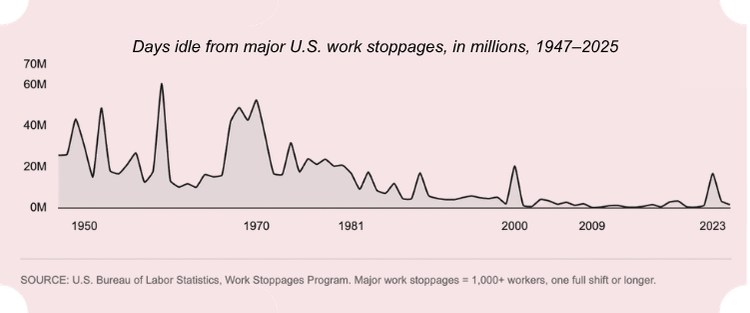
Labor used to think of its power as the power to withhold labor. After Reagan and the air traffic controllers in '81, striking became less potent. By the '90s, with the rise of the service and public-sector unions, labor pivoted to strategic communications. A strike in 1965 could shut down a few plants and the employer would cave because the supply chain stopped. Now, strikes rely on shaming a company in public. The press is a much more central player and those of us who cover labor have to be aware of what's real and what's PR.
There's another term for these kinds of people: embarrassed elites. The history of embarrassed elites is written in blood — they revolt more readily than the poor, who are busy scraping by. Do you see your subjects' pushback ceasing to be nonviolent?
It's empirically true that we've had an uptick in political violence over the past ten years. Robert Pape at the University of Chicago has shown that 10% on either side now tolerate or support political violence. What comes through in Pape's research is that it isn't desperate people doing this. It's people who fear downward mobility. The reaction to Luigi Mangione would have been shocking twenty years ago. The tails of the distribution have fattened. We aren't on the verge of violent revolution, but we'll see more political violence and some of the people committing it will be from this class.
The people in your book want to throw off their shackles, but they show no impulse toward entrepreneurship. Why?
Entrepreneurship has gotten a bad name, partly because of the gig economy — a sense that tech got big by pushing risk onto individual people. Also, 2008 left people with real risk aversion — an emotional yearning for stability — and entrepreneurship is inherently unstable. Also, ideologically, being a tech founder was a high-status calling until about 2015. Then Cambridge Analytica, Travis Kalanick, Elizabeth Holmes — the founder goes from heroic to a tear in the social fabric.
The 40-under-40-to-prison pipeline.
Exactly. The whole dream is tainted.
Graham Platner is running for Senate in Maine on oyster-farmer-and-Marine bona fides — but he went to GW. Will more candidates pitch themselves as college-educated working class?
Yes. AOC is the canonical example. In an earlier generation, scrambling from job to job after college — bartending, waitressing, a nonprofit gig that didn't take — would have been a source of shame. By 2018, it was a condemnation of the system. AOC gave voice to that. Mamdani went to Bowdoin, then bounced around and flirted with being a rapper. Exit polls show that 84% of college grads under 30 voted for Mamdani. The idea that 84% of anyone will do the same thing is shocking. So, yes, I think the college-educated working class will be a political fixture.
|