|
Status
On the national holiday America doesn’t celebrate.

Outside a handful of hemp-necklaced enclaves – the Berkshires, Michigan Northwoods, and Humboldt County – and suburban Minneapolis, May Day passed largely uncelebrated. That sucks.
The first of May was once the most reliably festive day on the English calendar. The Tudors celebrated. James I issued the Book of Sports in 1618 to defend the holiday against Puritan attack. Charles I reissued the volume fifteen years later as, in America, the Pilgrims abolished the maypole. Lay siege to it, really.
The tradition wasn't lost so much as it was hunted to extinction.
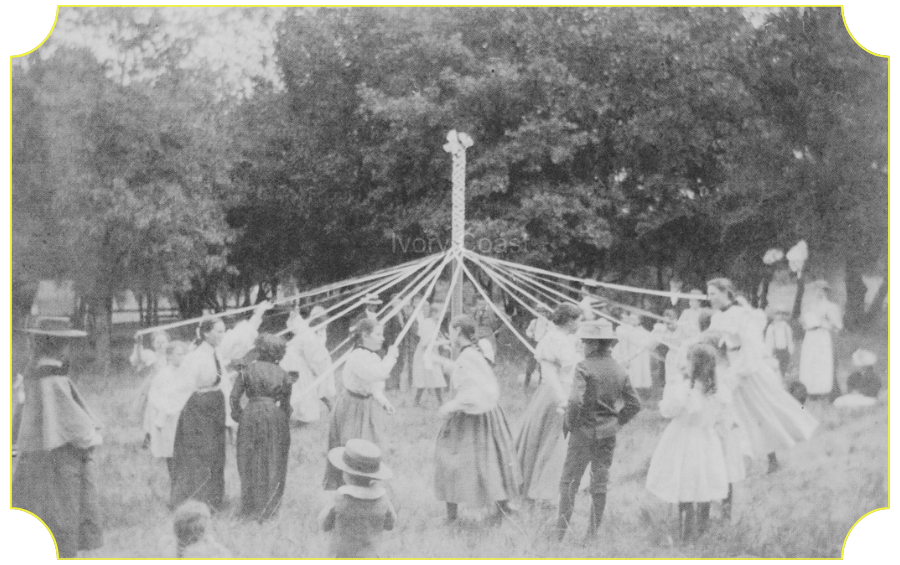
A country cannot celebrate both May Day and Thanksgiving. The mythos of one contradicts the mythos of the other. May Day is a celebration of natural bounty enjoyed. Thanksgiving is a celebration of natural scarcity overcome. One is about deserving. The other is about receiving. One is about work. The other is about good fortune. Which is why, in 1628, a band of armed Pilgrims led by murderer Miles Standish snuck up on the residents of Merrymount [3], a thriving trading community twenty-five miles north of Plymouth known for its raucous May Day celebrations, seized community founder Thomas Morton, and left him stranded, naked, on an island off New Hampshire.
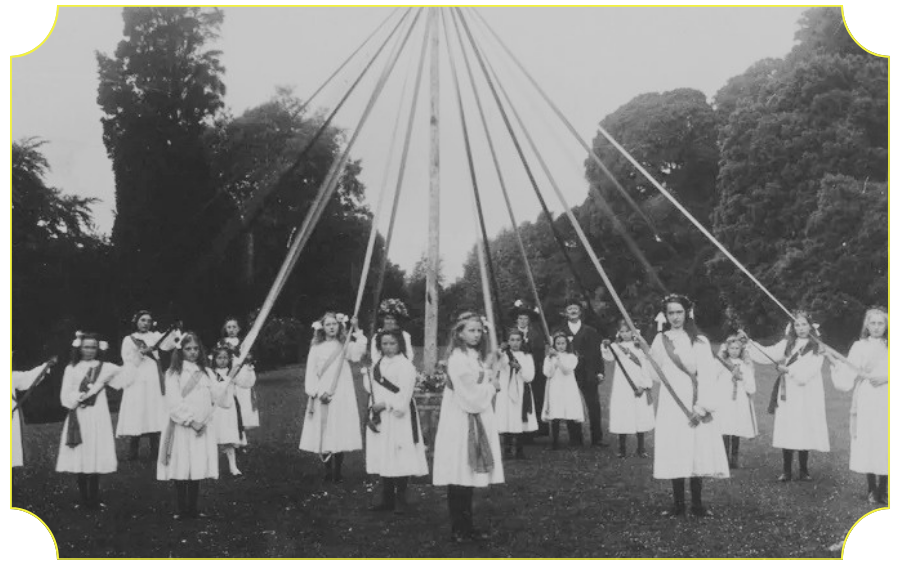 Morton arrived after the Pilgrims, but by 1628 he'd effectively cornered the New England beaver market by paying the Algonquians better and selling them guns. He was rich, and the men who'd followed him across the Atlantic were rich too — one of his servants cleared £1,000 in five years on beaver, multimillionaire money — which bothered the not-so-Puritan, upper-middle class English merchants settling Boston. The May Day raid on Merrymount was financed exclusively by rival traders – capitalist averse to truly free markets who found common cause with religious extremists who resented Morton’s happiness and loathed both his penchant for pole dancing and gratitude.
In his book New English Canaan — which received the dubious honor of being the first publication banned in what would become the United States — he describes arriving in Massachusetts Bay in 1622 and watching the Pilgrims starve in a country he found absurdly rich. “The more I looked, the more I liked it," he wrote. "If this land be not rich, then is the whole world poor.” Historian Bernard Bailyn would later call Morton "one of the strangest, most flamboyant, and most belligerently impious people ever to wander into the coastal scene."
Three centuries on, Philip Roth would advocate, through the narrator of The Dying Animal, for adding Morton's face to Mount Rushmore. Roth called Merrymount a "utopia of candor," built around people as they are, as opposed to the Pilgrims' “utopia of virtue,” built for people as they ought to be – according to those with social capital. At Morton's Merrymount, the residents drank and traded and flirted with their native neighbors as the Puritans flirted with starvation.
Virtue and plenty are not antithetical, but they have a complicated relationship. Governments exist almost entirely to manage surpluses, because surpluses require a conversation about distribution and redistribution which in turn requires a conversation about people who don't work hard — who lack virtue — still getting something. The Pilgrims solved that problem — compounded by a belief in pre-destination that dictated mortal behavior did not dictate immortal rewards — by avoiding a surplus.
They settled at Plymouth — sandy soil, poisoned spring — and planted English barley and peas instead of maize. They lived next to one of the richest fisheries on the planet, but rarely fished because they brought the wrong hooks [4]. They were surrounded by deer, but didn't really hunt, because venison in England was a privilege of the landed gentry.
The standard story is that the Pilgrims came to escape religious persecution. They came to escape religious freedom. Twelve years of Dutch tolerance had produced a generation "drawn away by evil examples into extravagant and dangerous courses," William Bradford fretted, "getting the reins off their necks." One way to get the reins back on was to build an agrarian society at odds with the environment. As Plymouth minister Robert Cushman put it in 1621: "Idle drones are intolerable in a settled commonwealth."
The Protestant Work Ethic was not then (and is not now) about results. The pilgrims worked harder than Thomas Morton and his merry men because they chose to do so. And that choice informed the culture that took root in the New World. Americans with more food, more leisure, more medicine, more square footage, and more discretionary income than almost anyone in human history live in permanent suspicion of privilege, treating personal surpluses with suspicion while voting against redistribution. In a sense, the long-term project has been to create failed plantations for most and Merrymounts for some.
Morton's maypole was eighty feet tall, a goodly pine with a pair of buck's horns nailed near the top. It took the Pilgrims a long time to cut it down. It took them longer still to expunge its memory. But the Utopia of Virtue ultimately triumphed over the Utopia of Candor. That’s why May Day passed largely uncelebrated – and largely unmourned.
|