|
Money
A history of financial advice is bearish on financial advice.

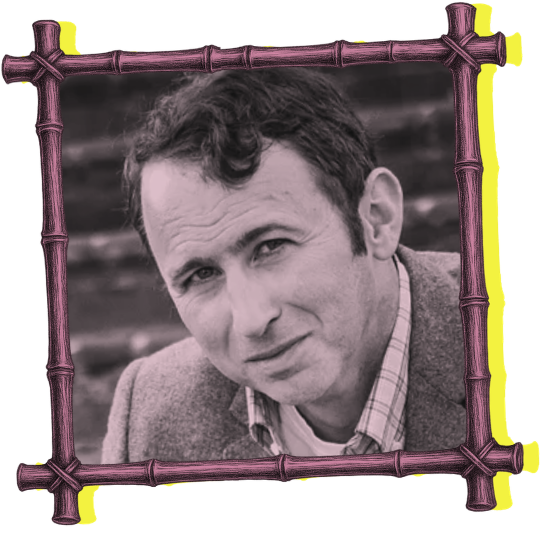
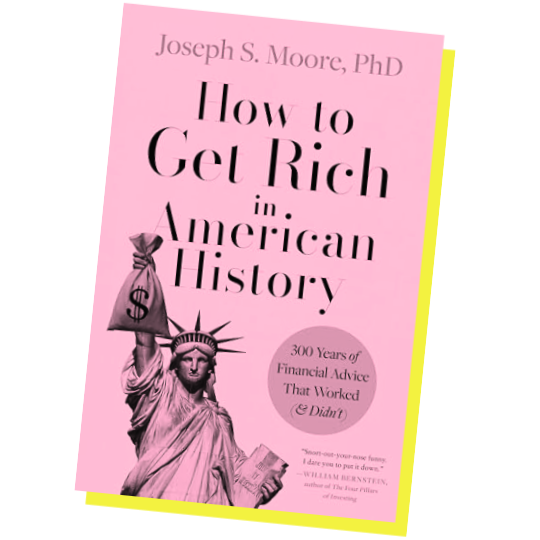
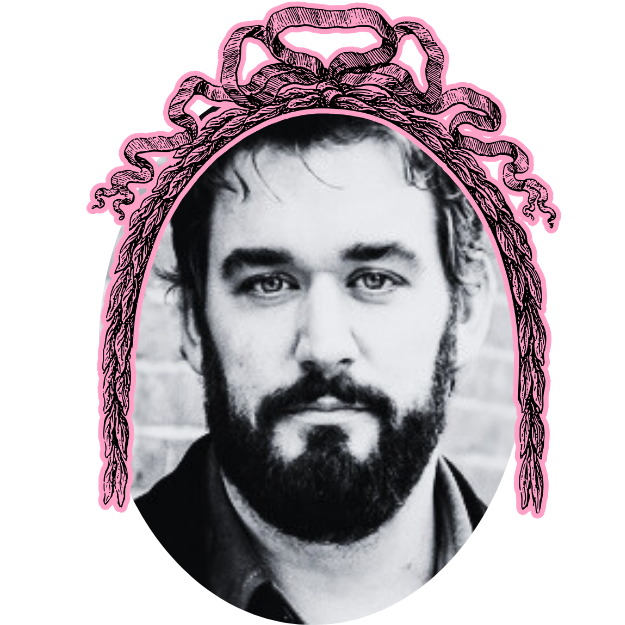
The smart money wasn't on Joseph Moore writing a bestseller. A history professor at Gardner-Webb University in Boiling Springs, NC, Moore's previous book — a study of Scottish covenant theology — didn't fly off the shelves. His latest, How to Get Rich in American History: 300 Years of Financial Advice That Worked (& Didn’t), is soaring thanks to a Gladwell endorsement and Adam Grant choosing it for his Next Big Idea Club. The hype is deserved. The book does precisely what the financial-advice industry has spent decades carefully not doing: perform an audit. In Moore's telling, financial advice has always been iffy because getting rich is a messy process and different strategies work better at different times. In covering 300 years of American history and conventional wisdom [3], Moore uncovers a critical truth: America is not just the land of opportunity, it's the land of opportunism. Risk is rewarded.
Upper Middle spoke to Moore about economic doomerism, risk-aversion, marriage as LLC formation, and that time he accidentally rented a house to a human trafficking ring.
In a sense, your book is a rebuttal to the financial advice genre. It suggests there's no one way to get rich in America — that different strategies work at different times. What’s your take on financial advice as a genre?
Those books often miss a few things. They miss how much wealth building has always been about taking real risks on real opportunities, not just optimizing a portfolio. Risk is wildly over-rewarded in the American system in a way it isn't elsewhere in the world. Yes, disciplined savers can sometimes quietly compound their way to security, but mostly the path to wealth is messier and more entrepreneurial than that. The other thing those books miss is just how fast wealth can dissipate. Historically, roughly 90% of the grandchildren of the top 1% don't end their lives wealthy.
It seems like the index-investing, responsibility-first stuff is, in large part, a product of Baby Boomers having a really specific economic experience. Is that fair?
There's definitely some distortion there. If you were to go back in history and run the Baby Boomer playbook — work 40 years and invest 10% of earnings into stocks — starting every year from the American Revolution to yesterday, it would fail to fully fund a retirement nearly half the time.
It seems like that singular experience of public equities has reoriented people around a fear of losing rather than a desire to win.
To a degree, yes. We are more risk averse than we've ever been in what has to be the least risky age of American history.
One reason our risk-aversion is strange is that the American system gives people more help than they realize. Why don't we talk about that?
The single greatest financial invention in American history is the 30-year amortized mortgage. We can basically short the US dollar, because we know it's going to go down in value. At any time you want, you can take a lower interest rate, but nobody can make you go up. That's the government giving you a massive running start. People in other countries cannot believe we get this and we treat it like it's normal.
A lot of people operate under what I call the ‘7UP Theory of Capitalism’: The government shouldn’t intervene in markets. I call it that because 7UP used “to run these anti-caffeine ads that said ‘never had it, never will.’ Well, everyone drinks caffeine and the government always interferes in markets. Thomas Jefferson turned the US government into the largest lender in the history of the world – and that was before he bought Louisiana. The idea that government getting involved is unusual or bad is crazy. Many people underestimate their net worth by six figures because they don’t count government benefits.
This stuff is confusing to people because it’s politicized.
Part of what makes the book interesting is that it exposes how narratives about the economy and, more specifically, narratives about specific generational experiences of the economy often turn out to be horseshit.
In 1980 or '81, there was a book that sold almost 100,000 copies arguing that the middle class was dead and the Baby Boomers were screwed. The Boomers were about 30 at the time and interest rates had shot up — a new mortgage on a median home would have eaten 52% of the median household income. The case looked airtight. But the Boomers went on to do quite well. So when people tell me today that the system is broken and the next generation is doomed, I think: We've heard this before….
A word you use a lot in the book and that keeps coming up in this conversation is “family.” Why do we need to talk about family when we talk about money?
We always say America is an individualist country. But if you look at history, when people – mostly men – talked about themselves and their ambition, they were really talking about their whole family. The family part was just assumed. Now, we are hyper-individualized. We're delaying marriage and having kids. The trouble with getting married later is that it's like two private businesses forming a lightly bound LLC. It's not conducive to risk taking and diminishes the window for risk-taking. That leads to the sense that any discussion about money is about ‘me and my money’ — but most of American history would have been ‘us and our money.’
That said, there’s a specific group that stand out as bucking the trend slightly. Who couples at the highest rates? Professionals in the upper-middle class. Why? Because it works. The upper-middle class has adopted the marriage styles of the old working class. And that’s true across the political spectrum I know many burn-the-patriarchy feminists who live very traditional married lives.
So what does intelligent risk-taking actually look like for someone who's already comfortable?
It’s not HELOC-ing the house to buy Bitcoin — that's gambling. It looks like betting on yourself or betting on your spouse because they have a great idea or a great career opportunity. Is there something your family has that you can invest in as a business, as a career, as an opportunity — something with asymmetrical payoff? Historically speaking, that’s the path.
Last thing. You devote about three sentences in the book to the fact you once accidentally rented a house to a human trafficking ring. That is not enough sentences.
Fair. A woman rented one of my houses — lovely, college-educated, says she works for a temp agency and just took a promotion across town. Perfect tenant. Turns out she’s helping to operate a human trafficking ring bringing Haitian workers over the border to work in North Carolina's lithium mines. The FBI asked us not to evict her because they were investigating so we helped with the investigation. Hopefully the world is better because we did, but the house got trashed. The big lesson there: Passive income isn’t so passive most of the time.
|