Issue No. 77  ·  April 30, 2026
Upper Middle Logo

Get appointed. Get disappointed. Get appointed again.

Just Asking: Who wants to throw tea in a harbor?
In this issue
01 Fake People ➼ On being a dog on the internet
02 Efficient Pleasure ➼ On cosmopolitan leisure deskilling.
03 Scab Picker ➼ On professional class treachery.
Upper Middle Illustration
 
Note Whenever I see a guy wearing a sweater and shorts, I feel I've met a friend.
 
Also Voting Rights & Class·Diet Nepotism·How to Set a Table
Upper Middle Illustration
THE UPPER MIDDLE INDEX
Upper Middle Research ➼   Get paid up to $200-an-hour to take surveys.
Support Us ➼   We want to do more. But this shit is expensive (so is daycare).
Class-ifieds ➼   Ask for help and help others. Nicest place on the internet.
Upper Middle Illustration
Status

Fake People
A.I. influencers are creepy. What if they're also smart and sincere?
Upper Middle Divider

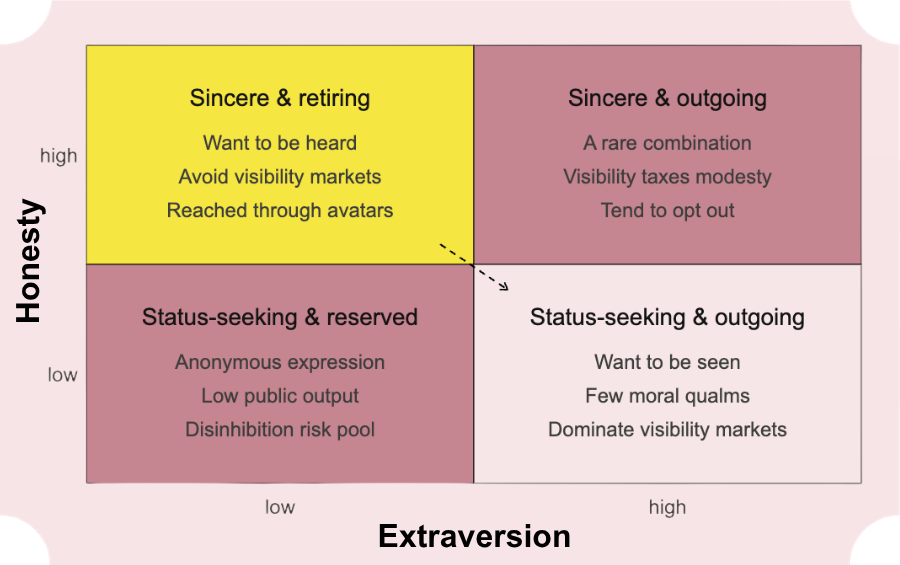
The New Yorker is worried about A.I. social media avatars – so worried the editors just showed their hand with the very rare, very un-Eustace Tilly screamer of a search headline: “A.I. Is Making Influencing Even Faker.” Regrettable wording aside (let's not assign A.I. agency just yet), that hed presents a false premise: Influencing could get faker. Nope. Per a 2016 study [1], low scores on personality measures of sincerity are highly predictive of selfie posting. Per a 2011 Ohio State study, self-promotional behavior is positively correlated with academic cheating. In other words, the personality market driving the influencer economy already selects for indifference to the truth. The fakeness is human. Blaming avatars for fakeness is like blaming ozempic for vanity.
image
In fact, as Vogue recently noted, avatars may create more truth-seeking influencers. If sincerity is predictive of not taking selfies and avatars eliminate the need for selfies, more sincere people can influence. There’s precedent. Consider NoFilterPhilosophy, an Insta account with over 600K followers featuring a cartoon dog opining on Wittgenstein. The videos are produced with Adobe Character Animator using a 2D puppet rig. That’s a real, albeit surmountable, barrier to entry for the faceless creator. As A.I. brings that barrier down, more sincere and well-read thinkers will be able to script characters in the feed without succumbing to the pressures of its current personality market. Will Pynchon become a VTuber? No. But he could.

In 1993, Peter Steiner drew a New Yorker cartoon of two dogs at a computer. One says to the other: "On the Internet, nobody knows you're a dog." That’s the old paradigm. Going forward, the humans worth following may be passing as dogs online.

Upper Middle Illustration
Upper Middle Analytics
Outdoorsy Elites...
Upper Middle Analytics chart
Taxes & Democracy
Taxes & Democracy

You get what you pay for... except when you don't.

Take the Survey →
 
You already compare yourself to your peers. Now, do it with data. Surveys take 1-2 Min. Personalized results generate in 5-10 seconds.
Small Luxuries & Spending (n=339)
COMPARE →
Career Choice & Regret (n=319)
COMPARE →
AI & The Future of Work (n=265)
COMPARE →
Upper Middle Illustration
Taste

Efficient Pleasure
Stillness is a skill. I lost it.
Upper Middle Divider

Yesterday, I went and sat under the apple tree in my yard. The sun was warm, the air was cool, and I expected – not unreasonably – that I would take pleasure from laying in dappled light. I settled in, shut my eyes, and waited for the dopamine. A few minutes later, I started to squirm.

Comfort is given. Pleasure is taken – with skills developed over time. Sunshine is a comfort. The feel of soft, new oatgrass is a comfort. But stillness is a pleasure. More specifically, it's an inefficient pleasure. That's the problem. I forgot how to take it.

Like most ambitious college grads, I began adulthood in a major metro where the professional pace and the cost of living allowed for all sorts of comforts, but not a lot of laying around under trees. Like my friends, I upskilled as a professional while deskilling as pleasure seeker. What pleasures I ultimately pursued — the museum visit, the show, the dinner out — were selected more for efficiency than return on time invested. The skills required for inefficient pleasures, no matter how high-yielding, atrophied.

I know what to do with an apple tree and a sunny day, but forgot how to do it. I spent too long doing other things.
image


A 2004 time-use study found that urban professionals participate in an average of seventeen discrete leisure activities across fifteen hours each week. That fragmentation is not inevitable, but it’s very common. The young professional arrives in the city with a very non-specific set of skills — pottery, tennis, dog care, reading fiction [3] — and, due to time and money constraints, can't use them. They run towards comforts (YouTube and DoorDash) and efficient pleasures (art, Pilates, sex, and gossip).

After a while, that gets hardwired. And it’s not merely an issue of attention span. It’s an issue of bodily deskilling.

The sociologist Georg Simmel described this emerging nervous condition all the way back in 1903. The city, he argued, delivers such a volume of nervous stimulation that the urbanite's nervous system develops a protective indifference, which often manifests as a blasé attitude. The adaption required to take in a wide variety of inputs is the source of the cosmopolitan "meh." An over-it-all attitude is often mistaken for a pose or affectation, but it’s really a coping mechanism. Sophistication is what’s left when former shade enjoyers get desensitized used.

Thus my (still-active) Metropolitan Museum of Art membership.
image


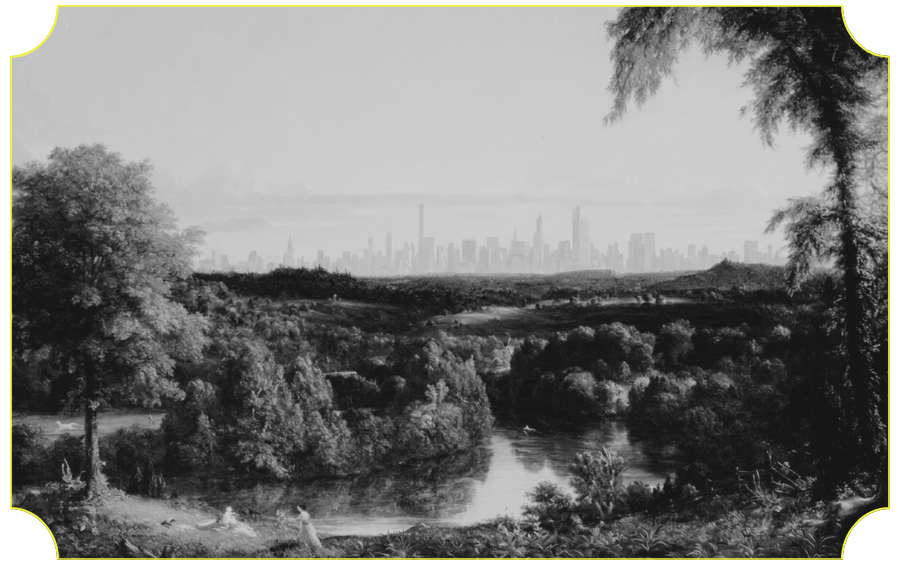
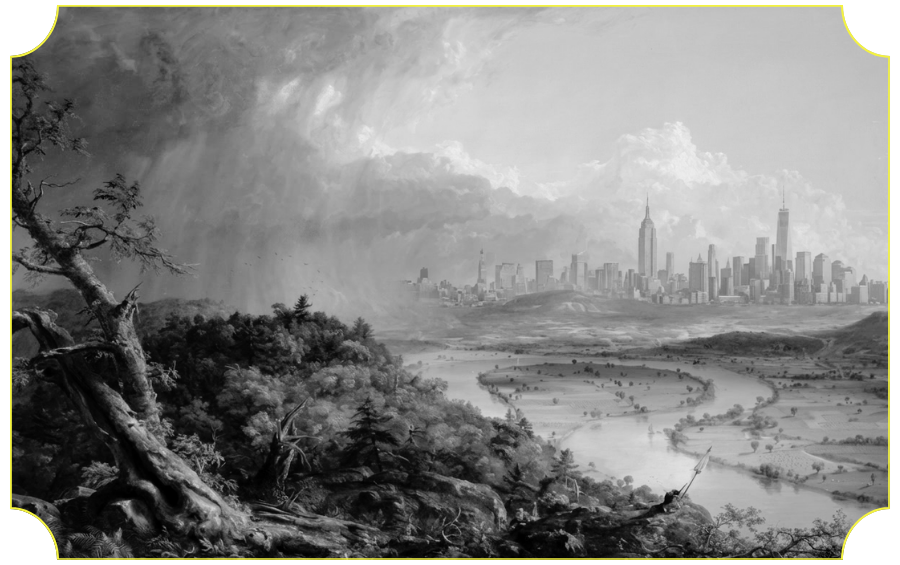
The Met is glorious. It is also a crutch for those of us unable to enjoy a long walk along the Hudson River. I’m partial to the Hudson River School, but I suspect my appreciation isn’t just appreciation. Those paintings let the overstimulated and deskilled museum-goer derive an efficient pleasure from the inefficient pleasure-seeking of Cole, Church, and Durand [4]

What I appreciate at the Met, or at a great restaurant, or at a concert, is often the inefficient pleasure-seeking of someone else — a person who practices. Those that can’t do have sophisticated opinions about those that can.

I can be like that. And because I let myself be like that for so long, I now struggle to be other ways.

I gave myself an hour under an apple tree and came away with an essay. That’s not nothing, but it also wasn’t what I wanted. I lacked the skill to take that.

Upper Middle Illustration
Interactive · Taste Tests
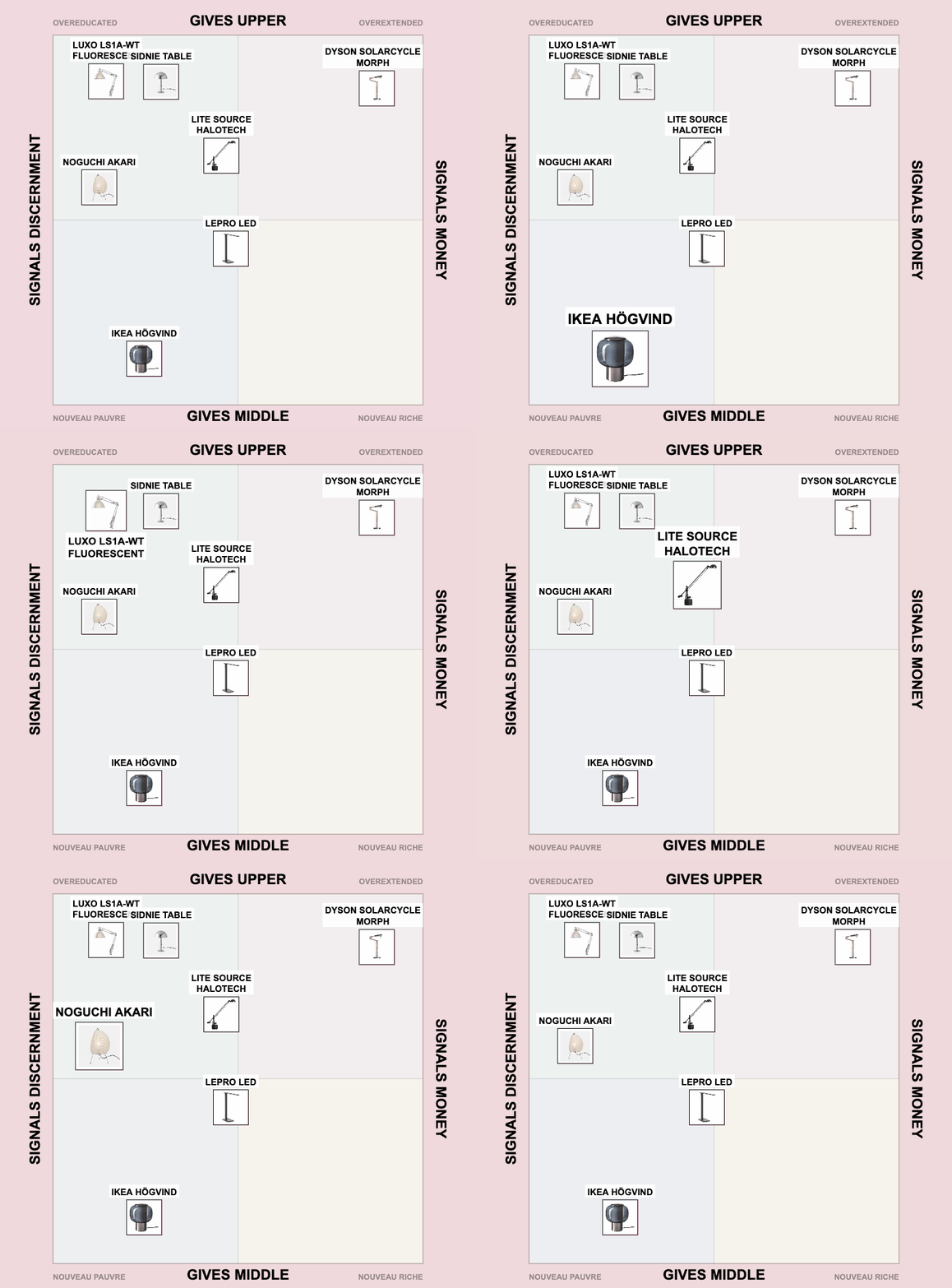
Desk Lamps

Test-takers think the Luxo LS1A-WT Fluorescent has old money vibes, the IKEA HÖGVIND has a Deep Brooklyn feels, and the Dyson Solarcycle Morph reads as a plea for attention.

Taste Test Maps Taste Tests
Women's Eyeglasses
NEW TASTE TEST
Women's Eyeglasses
What do your snap judgments say about you? Find out if you're good at being judge-y by comparing your first impressions to others.
TAKE THE TEST →
Upper Middle Illustration
Money

Scab Picker
Traitorous members of the professional class are derailing a negotiation.
Upper Middle Divider

Mercor, the Peter Thiel-backed AI training platform valued at $10 billion, recruits doctors, lawyers, bankers, and social workers to train their AI replacements. Speaking to Bloomberg last week, early investor Adam D'Angelo explained the company's young founders, who’ve never had actual jobs, were perfect because their minds hadn't been "corrupted by the conventional way of doing things." It was a bizarre way to admit only boys with underdeveloped frontal lobes and zero life experience would feel no sense of solidarity for workers. But SF’s psychopaths du jour arguably are arguably less venal than the doctors annotating scans for $250 an hour and the attorneys redlining contracts for $200. White-collar workers without unions still ought to consider themselves part of… something.

And that's not just a moral claim. Those engaged in self-liquidation may justify their behavior in terms of economic self-interest and inevitability, but there's no self-interest in treating automation as inevitable. It's just really, really dumb. Just ask a typesetter. When the Linotype arrived in 1886, a single operator could suddenly do the work of four hand compositors. The International Typographical Union looked doomed. But somebody still had to run the machines. The ITU agreed to do it — if, and only if, its members were the only ones allowed to touch the machines. Rather than shrinking, the union grew as newspaper margins increased. When computerized typesetting arrived eighty-eight years later, ITU Local 6, which included the typesetters for the Times, traded the Grey Lady the right to automate in exchange for lifetime employment guarantees. She made the deal because as well as new machines may work, monkey wrenches always work better.

Upper Middle Illustration
Class-ifieds
Reader listings — jobs, referrals, housing, and everything else
Pattern Recognition
Senior IT leader, vintage enough to have configured BBS systems, modern enough to know which AI tools aren't slop, seeks org-level transformation role. I translate between the technical and the technically averse with zero detectable smugness. Three bubbles in and still solvent.
Reply →
Seeking Second Act, No Briefs
Litigation attorney, early 50s, seeks strangers willing to describe their post-practice JD-preferred work in granular detail over coffee or email. Compliance? Mediation? Something with "strategy" in the title? No STEM, no crim, no more depositions — ever. Will repay with deep listening and the focused gratitude of the recently unbillable.
Reply →

How can we help you?

Place an Ad →
Upper Middle Illustration
Andrew Burmon Footnotes

[1] Lead author Agnieszka Sorokowska, then at the University of Wrocław found extraversion and social exhibitionism positively predicted frequency of selfie posting, but (and this is important) self-esteem really didn’t. Influencing is not about confidence. It’s about confidence men. [2] The worst thing about San Francisco is that you know these people have talked about this at a party and that not one person threatened to kick their ass. [3] I still think of myself as having skills like drawing that I did once have. No longer. Womp womp. [4] Durand: “I would sooner look for figs on thistles than for the higher attributes of art from one whose ruling motive... is money.”